


There’s a particular understated confidence to a great British script: characters speak with an economic, natural rhythm, institutions go largely unexplained, and the dialogue trusts the viewer to keep up without a translator. One of the reasons British television feels so authentic is that it rarely pauses to explain itself.
That’s because British English is a language of implication. Rather than spelling out every emotion, it relies on shared cultural shorthand and deep context to carry the real meaning of a scene. A character won’t explain that they are exhausted after a grueling shift; they might simply say they are “knackered,” a common term for total fatigue. They won’t pause to clarify whether “cheers” means thank you or goodbye. They just assume you know.
Learning just a handful of common terms, acronyms, and expressions won’t just expand your vocabulary; it will make entire conversations, jokes, and storylines suddenly click into place. Here is your essential roadmap to decoding the language of British TV.
Everyday Institutional Shorthand
British writers use daily institutional terms as an instant form of world-building. Because these organizations are part of daily life, characters reference them casually to ground a scene in reality.
- NHS (National Health Service): Britain’s publicly funded healthcare system. Instead of a character explaining they are going to a hospital or worrying about medical bills, they will simply mention “the NHS.” Think of the bustling corridors in Casualty or the everyday medical crises handled in Call the Midwife: the NHS is the invisible backbone of almost every British drama.
- GP (General Practitioner): The equivalent of a primary care physician or family doctor. In Doc Martin, Martin Ellingham (Martin Clunes, Men Behaving Badly) isn’t a high-flying surgeon anymore; he is a local GP running a sleepy village surgery—and terrorizing locals with his horrific bedside manner. When a character tells a loved one to “go see your GP,” they are setting up a crucial health plotline.
- The Tube: London’s Underground railway system. In modern dramas set in the capital, like Sherlock or Luther, characters are constantly “heading on the Tube” rather than taking a subway or hailing a cab.
- Council: Depending on context, this refers to local municipal government or publicly owned housing. When a script references a “council estate” or a “council flat,” the writer is giving you immediate, unspoken clues about a character’s social environment and economic background. You see this landscape constantly in gritty dramas like Happy Valley.
Cop Ranks and Legal Battles
If you’re getting into British crime dramas and legal thrillers, the dialogue can feel like a maze of acronyms because scripts rarely pause to define a rank or a job description.
The Police Hierarchy (DCI, DI, DS)
British police procedurals live and die by acronyms like DCI (Detective Chief Inspector), DI (Detective Inspector), and DS (Detective Sergeant). Once you recognize that these denote a strict chain of command, shows like Line of Duty, Broadchurch, and Vera become much easier to follow. The dramatic tension frequently hinges on a DS answering to a DI, who answers to a DCI. When an investigator pushes back against a superior officer, understanding that rigid professional boundary makes the power play so much sharper.
The Courtroom Split (CPS, Barristers, and Solicitors)
- CPS (Crown Prosecution Service): The independent body responsible for prosecuting criminal cases. While detectives investigate the crime, the CPS decides whether a case has enough legs to move to trial. In Unforgotten, an investigation often hinges on a tense phone call where detectives try to convince the CPS to authorize an arrest warrant.
- Solicitor: A lawyer who advises clients, handles legal paperwork, and prepares cases behind the scenes. If a suspect in a Line of Duty interrogation room demands to “call their solicitor,” they’re talking about the defensive advocate sitting right next to them—not an attorney who argues in court.
- Barrister: A specialist courtroom advocate. Unlike solicitors, barristers wear traditional wigs and gowns to actively argue cases in higher courts. In the legal drama Silk, the show revolves around the fierce competition between ambitious barristers fighting for top courtroom titles.
The Pub, the Street, and the Living Room
So much of British dialogue’s charm lies in its casual, conversational slang. British comedies and dramas thrive on affectionate teasing and emotional understatement, using specific words to mask or amplify how a character feels.
- You alright?: One of the most frequently misunderstood greetings on television. When a character asks this, they aren’t asking if you look sick or upset; they are simply saying “Hello.” Characters yell “You alright?” across the street to greet each other, not to check on their medical status.
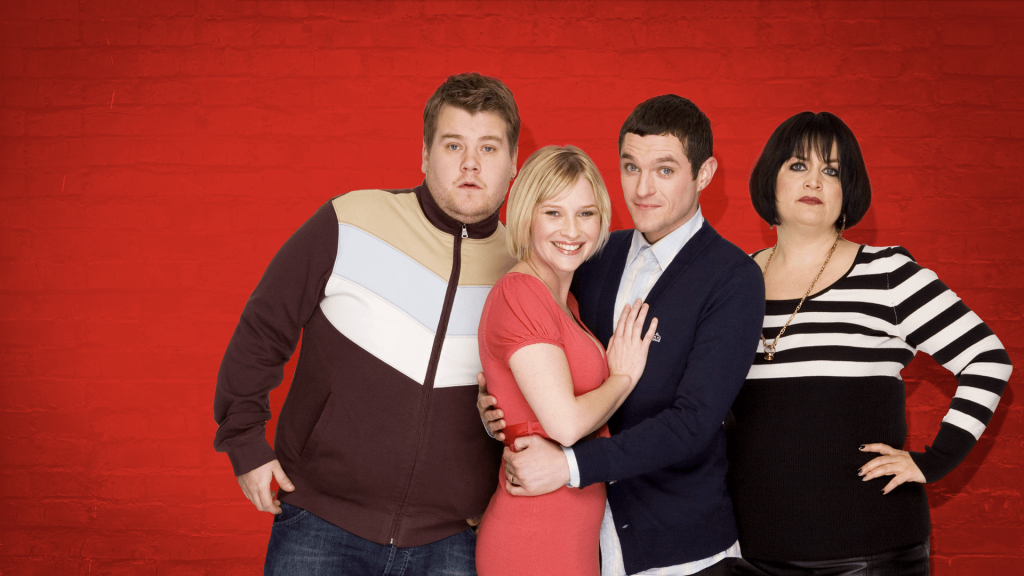
- Fancy…: A friendly invitation meaning “Would you like…?” In Gavin & Stacey, a casual “Fancy a pint?” or “Fancy a cuppa?” (a cup of tea) is the standard way characters initiate a major heart-to-heart conversation.
- Taking the Mickey: Gently making fun of, mocking, or teasing someone. British humor is often built on taking the mickey, and characters use it as an emotional shield. In The Inbetweeners, the boys spend much of their time taking the mickey out of each other as a dysfunctional badge of friendship.
- Proper: Genuinely, truly, or really. If a character in a crime drama like The Take says someone is a “proper villain,” they are telling you this isn’t a petty criminal—this is someone dangerous.
- Sorted: Problem solved. In Luther, when Idris Elba’s character cuts a shady backroom deal or finishes a rogue investigation, a quick, muttered “sorted” signals to the audience that the crisis is handled.
- Pleased / Gutted: A study in understatement. In In the Long Run, a character might say they are “pleased” after a life-changing family achievement. On the flip side, if a character is “gutted,” they are bitterly disappointed or heartbroken—usually right after a massive plot twist.
- Dodgy: Questionable, suspicious, or unreliable. A writer will use this word to describe anything from a “dodgy alibi” to a “dodgy deal.” In Only Fools and Horses, Del Boy’s entire business model is built on selling merchandise that is, in a word, “dodgy”—usually out of the back of a three-wheeled van.
- Off-Licence (or “Offie”): A neighborhood shop licensed to sell alcohol for consumption elsewhere. When characters in Peep Show pop out to the “offie” for a bottle of wine, it’s a quick trip that usually leads to total social disaster.
Settling In
Once you get these expressions, you start to see the real relationships and feelings just beneath the surface of a joke.
The dialogue on your screen won’t feel like a foreign language anymore; it will feel entirely familiar. Before long, you’ll be following plotlines with ease, and you may even catch yourself saying “cheers” without thinking twice.