

What separates a British spy thriller from a Hollywood blockbuster is a commitment to realistic depictions of espionage. The enemy is frequently obscured, the mission is often morally questionable, and success can feel suspiciously like failure. Trust, where it can be found, is treated as a temporary liability.
At their core, the best British spy dramas rarely ask whether the hero will save the day. Instead, they ask whom the hero can trust, and whether the institution they serve deserves that loyalty in the first place. They trade explosions for ambiguity and action for deep suspicion. The result is a storytelling tradition as smart as it is suspenseful, and one of British television’s most enduring exports.
For viewers looking for genuine tension over superficial action, these six essential series chart the evolution of the genre, from the moral fog of the Cold War to the bureaucratic chaos of modern intelligence work.
Tinker Tailor Soldier Spy
Few shows have ever put institutional paranoia on screen with the precision of this landmark 1979 BBC adaptation. Based on John le Carré’s semi-autobiographical novel, the miniseries follows the quiet, devastating hunt led by George Smiley (Alec Guinness, Star Wars: A New Hope) for a high-ranking Soviet mole hidden deep inside British intelligence.
The department in question is known simply as “The Circus,” and Guinness’s performance was so definitive that le Carré admitted he could no longer picture his own version of Smiley when writing later novels. Director John Irvin allows the claustrophobic tension to emerge through hushed conversations, archived files, yellowed memories, and the slow realization that betrayal is already sitting in the room. A sideways glance across a sterile Whitehall office carries far more dramatic weight than a gunshot.
Smiley’s People
If Tinker Tailor excels at identifying the rot within an institution, its 1982 sequel, Smiley’s People, explores what it means to live with the consequences. The story follows an aging Smiley pulled out of retirement for one final, personal chess match with his lethal Soviet counterpart and shadow-self, the spymaster Karla (Patrick Stewart, Star Trek: The Next Generation).
Under the direction of Simon Langton, the series strips away any remaining romanticism from Cold War espionage. It understands that real intelligence work is rarely a glamorous adventure; it is a slow, melancholy game of observation, human exploitation, and exhausting compromise. Featuring one of the most famous silent standoffs in television history, the show marked Alec Guinness’s final major television performance, cementing his legacy as the ultimate interpreter of Cold War exhaustion.
The Game
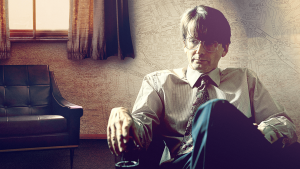
Set in 1972, creator Toby Whithouse’s The Game functions as a stylized love letter to classic Cold War thrillers. The plot ignites when a defecting KGB officer uncovers evidence of a massive Soviet sleeper-agent operation in the UK, known as “Operation Glass”.
The series thrives on moral uncertainty, visual atmosphere, rain-slicked London alleys, and smoke-filled rooms. As MI5 scrambles to investigate, suspicion engulfs codebreaker Joe Lambe (Tom Hughes, Victoria) and the unit’s pragmatic head, known only as “Daddy” (Brian Cox, Succession). The color palette is heavily desaturated, dominated by tobacco smoke, mustard yellows, and concrete greys to emphasize the drab, unglamorous reality of 1970s counter-espionage.
Spooks
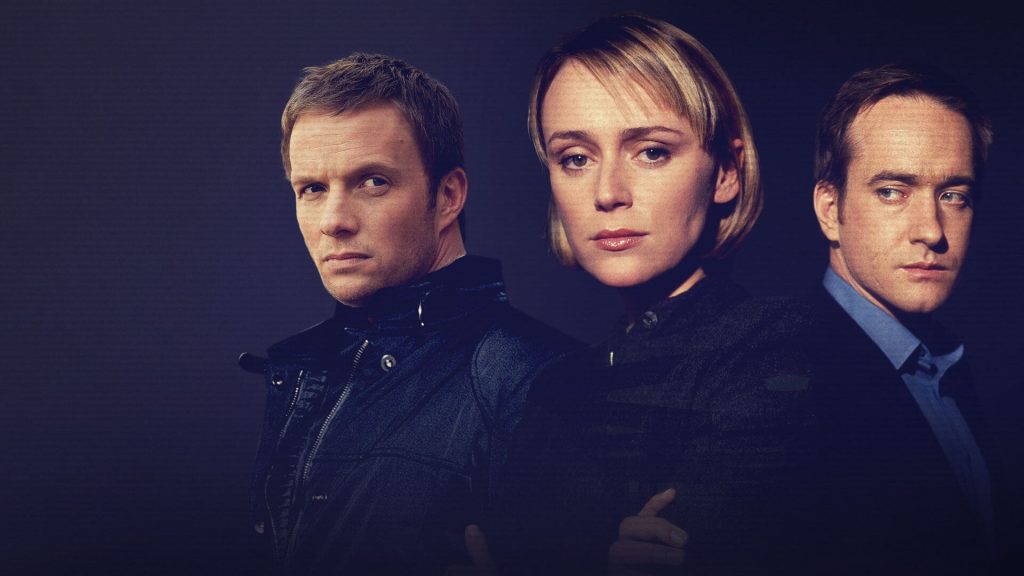
Broadcast as MI-5 in North America, Spooks modernized the British spy thriller for a post-Cold War world. Moving away from the slow-burn pacing of classic le Carré, creator David Wolstencroft placed his team of Joint Intelligence Committee agents under relentless, contemporary pressure.
Navigating a chaotic era of global terrorism and cyber warfare, characters like Tom Quinn (Matthew Macfadyen, Succession), Zoe Reynolds (Keeley Hawes, Line of Duty), and the stoic Harry Pearce (Peter Firth, Equus) operate at a breathless velocity. Beneath the split-screen urgency, the show constantly asks how much moral compromise an individual can accept in the name of national security before becoming the very threat they are fighting.
The Night Manager
Directed by Susanne Bier and adapted from le Carré’s post-Cold War novel, The Night Manager turns espionage into a dangerous performance of identity, luxury, and high-end seduction. Here, immense wealth, privilege, and sun-drenched Mediterranean estates become weaponized tools of deception.
The story follows Jonathan Pine (Tom Hiddleston, Loki), a former soldier turned hotel manager recruited to infiltrate the inner circle of charismatic international arms dealer Richard Roper (Hugh Laurie, House). Writer David Farr made the brilliant choice to gender-swap the handler role from the novel, casting Olivia Colman (The Crown) as Angela Burr. Her pragmatic, heavily pregnant working-class agent provides a wonderful, grounded contrast to Roper’s elite world of criminal luxury.
Slow Horses
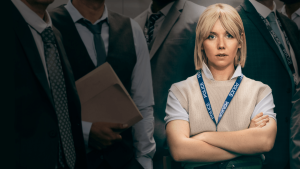
Few spy series understand the crushing reality of modern corporate bureaucracy quite like Slow Horses. Based on the Slough House novels by Mick Herron, the series follows a misfit group of disgraced MI5 agents who have been exiled to a dingy dumping ground for officers who made career-ending mistakes.
The show is led by the sharp but delightfully repulsive Jackson Lamb (Gary Oldman, Darkest Hour). Oldman channels the spirit of classic, old-school spymasters like Alec Guinness’s Smiley, but he deliberately degrades the archetype with stained coats, flatulence, and relentless cynicism. The clever subversion of the genre proves that intelligence institutions are often messy, petty, political, and that sometimes the ultimate act of espionage survival is simply managing professional failure.
——
Whether tracking Cold War moles, infiltrating elite criminal networks, or navigating the bleak comedy of institutional dysfunction, each great British spy drama understands a foundational truth of the genre: the greatest danger is rarely the enemy across the border, but the secrets hidden much closer to home.