

The fire is warm, the curtains are drawn, and the winter night arrived hours ago: it is the perfect time for a ghost story. Long before television entered British homes, telling supernatural tales was already part of the holiday season. Families and friends gathered against the winter dark to read stories about haunted houses, mysterious visitors, ancient curses, and things that should have remained buried.
When television arrived, the ritual simply shifted to a new screen. Britain’s Christmas ghost story tradition didn’t disappear when entertainment moved from the fireside to the living room; television became the new fireside, allowing millions of viewers to gather around the same eerie story on the same dark winter night.
It is a tradition that turned holiday television into an art form of its own, one chilly winter night at a time.
Why Ghost Stories Belong at Christmas
At first, horror might seem like an odd companion to Christmas, a season usually associated with cozy cheer. Yet that contrast is precisely why the ghost story works. Warmth needs darkness around it to feel truly comforting, and the classic British Christmas ghost story takes everything safe about the season—the house, the fire, the long evening indoors—and makes us hyper-aware of whatever might be lurking just beyond the windowpane.
The tradition flourished in Victorian Britain, when supernatural tales became closely associated with Christmas publishing and fireside storytelling. Charles Dickens gave the holiday its most famous spirits in A Christmas Carol, but he was hardly alone in recognizing that gathering during the darkest part of the year to frighten one another was pure entertainment.
M.R. James: The Master of the Christmas Chill
Few writers shaped the British television ghost story more profoundly than M.R. James. His tales frequently follow educated, rational people—academics, antiquarians, and clergymen—who run into something that simply doesn’t fit into their well-ordered world.
An old manuscript, an archaeological dig, or an object that should have been left undisturbed sets the nightmare in motion. James rarely needed elaborate monsters; the horror comes from the creeping realization that an ancient place has been disturbed, something has noticed, and it is now following you home.
That combination of scholarship, lonely landscapes, and subtle supernatural suggestion became the DNA of British TV horror.
Whistle and I’ll Come to You: The Ghost Reaches Television
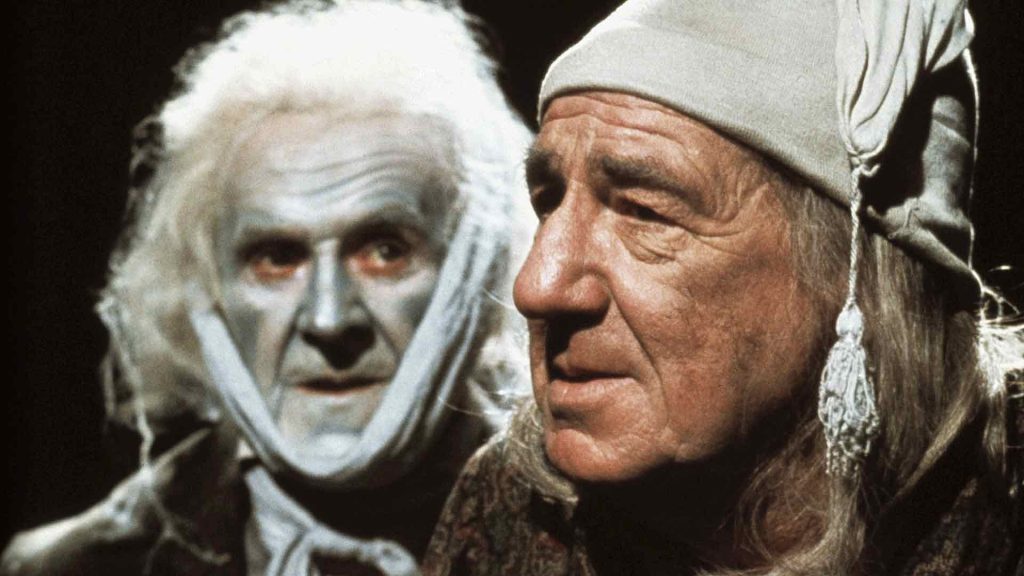
In 1968, the BBC broadcast Jonathan Miller’s adaptation of James’s Oh, Whistle, and I’ll Come to You, My Lad as part of the arts show Omnibus. Michael Hordern (The Lord of the Rings) plays Professor Parkins, a solitary academic visiting the East Anglian coast who stumbles upon an ancient whistle buried in the dunes.
Naturally, he blows it. The action remains one of the most spectacularly ill-advised decisions in British television history. What follows demonstrates the power of restraint: empty beaches, howling coastal winds, and distant, shifting glimpses of something approaching across the sand create a mounting terror without relying on cheap jump scares.
A Ghost Story for Christmas: The Annual Ritual
In 1971, director Lawrence Gordon Clark adapted M.R. James’s The Stalls of Barchester for Christmas Eve, launching the BBC’s legendary anthology show A Ghost Story for Christmas. The annual strand initially drew heavily upon James, producing masterworks like A Warning to the Curious, Lost Hearts, and The Treasure of Abbot Thomas, before expanding to adapt Charles Dickens’s The Signalman.
These were patient, atmospheric stories set in dusty libraries, grand country houses, and remote churchyards. Rather than chasing the ghost, the camera simply waits in the shadows for something impossible to step into the light.
The Art of Not Showing Too Much
Restraint is the defining pleasure of the classic British television ghost story. British Christmas horror rarely needs to kick the door down; it would much rather make you wonder whether you remembered to lock it. An empty hallway, a ticking clock, or a rustle from another room does all the work.
Protagonists frequently discover only fragments of the history they have disturbed, leaving them—and the audience—without a tidy explanation. That unresolved uncertainty follows the viewer long after the credits roll, leaving the door to the imagination slightly ajar.
The Modern Custodians of the Chill
Like any good spirit, A Ghost Story for Christmas refused to stay buried. The BBC revived the tradition in the 2000s, with actor and writer Mark Gatiss (Sherlock) becoming its primary modern custodian.
His festive productions have returned to M.R. James with adaptations of The Tractate Middoth, The Mezzotint, and Count Magnus, alongside original macabre tales starring actors like David Ryall (Harry Potter). While filming technology has evolved, the core ingredients remain unchanged: dim lights, a quiet story, and an unsettling atmosphere that makes your living room feel slightly less familiar.
The Ghost Returns
Christmas is already crowded with the past. We bring out decorations from decades ago, repeat family recipes, and remember Christmases gone by. The past always feels closer in December, which is why the supernatural feels so naturally at home beside the Christmas tree.
Turn down the lights and let the winter dark wait outside.