

A body in a country house, a detective with a complicated personal life, and a quiet town where everyone is hiding a secret.
Some of British crime television’s most familiar ingredients feel almost inevitable today, but they didn’t happen overnight. Over decades, classic landmark shows expanded what a detective could be, how deeply a mystery could explore psychology, and how much the surrounding institutions and landscapes mattered.
The language of modern British crime drama? These are the shows that wrote the dictionary. Watch any recent hit closely enough, and you will find their fingerprints everywhere.
Here are six foundational British crime shows that established the DNA of the genre and remain essential viewing today.
Inspector Morse: The Complicated Detective
Before flawed, eccentric investigators became the gold standard of British crime TV, there was Inspector Morse. John Thaw (Goodnight Mister Tom) stars as the brilliant, irritable Oxford detective who prefers Wagner, opera, and a cold pint of real ale to basic social pleasantries—and whose idea of urgent police work frequently involves finding a suitable parking spot for his classic Jaguar outside a local pub.
With Morse, audiences became just as invested in the detective’s inner life as in the solution to the murder. As a classic, the show established the enduring template for the complex, intellectual investigator whose personal obsessions drive the story forward.
Prime Suspect: The Flawed Institution
DCI Jane Tennison didn’t just investigate horrific murders; she had to battle the institutional sexism of her own police department. Helen Mirren (The Queen) gives a sharp, steely performance as a detective navigating a deeply male-dominated culture, where office politics and departmental bias prove every bit as dangerous as the suspects.
Prime Suspect redefined procedural television by showing that the institution behind the detective can be just as worthy of investigation as the killer.
Cracker: The Psychological Investigation
While traditional mysteries focused on how a crime was committed, Cracker fixated on the psychological why. Robbie Coltrane (Harry Potter) stars as Dr. Eddie “Fitz” Fitzgerald, an abrasive, chain-smoking criminal psychologist whose deep understanding of human weakness makes him a gifted profiler. His personal life is such a complete disaster that his suspects almost end up feeling sorry for him.
Fitz pushed British crime into darker, messier psychological territory. Its classic status comes from a simple, compelling idea: a criminal’s mind is the most fascinating clue of all.
Agatha Christie’s Poirot: The Art of Observation
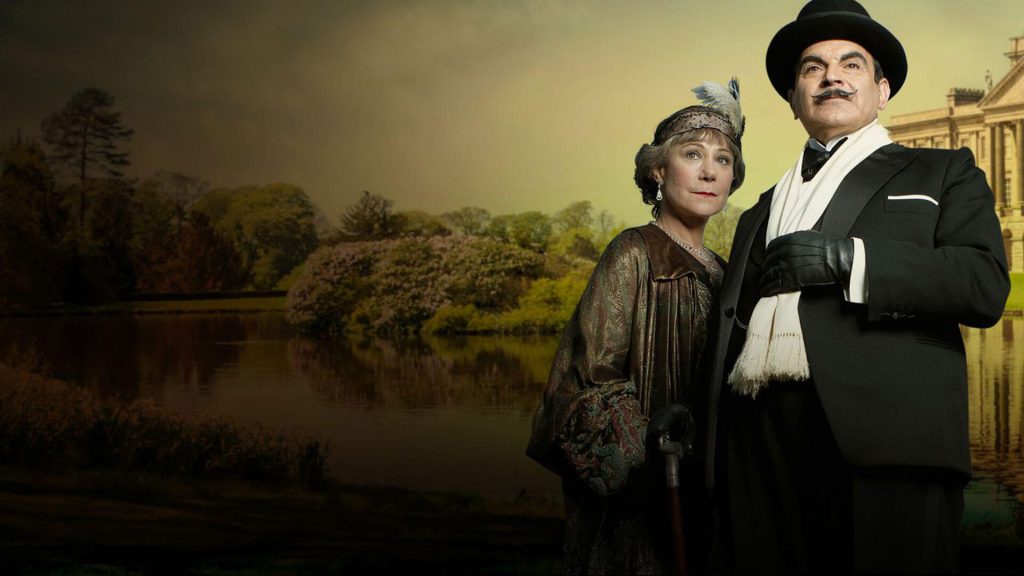
Not every breakthrough in crime television required dark grit; some simply required razor-sharp social observation. David Suchet (Press) embodies Hercule Poirot with exquisite precision, using his “little grey cells” to navigate high-society manners, class dynamics, and tiny human inconsistencies, (all while maintaining a mustache so immaculately waxed it practically deserves its own credit in the opening titles).
Agatha Christie’s Poirot demonstrated that a carefully maintained reputation or a tense family dinner contains all the pieces an investigator needs to solve the puzzle.
A Touch of Frost: The Workaday Hero
DI Jack Frost is hardly a sleek, polished television detective. And that’s precisely why viewers adore him. David Jason (Only Fools and Horses) plays an overworked, scruffy detective constantly battling petty station bureaucracy alongside grim murder investigations. Frost’s desk is a chaotic archaeological dig of misplaced files, cold tea, and forgotten evidence, showing that the real villain of British policing is often administrative paperwork.
Taggart: The Unforgettable Setting
While many shows rely on a single star detective, Taggart made the city of Glasgow its central character. Starring Mark McManus, this long-running police drama embraced a gritty, atmospheric tone where local streets, working-class neighborhoods, and regional identity shaped every case—reminding viewers that in Glasgow, even a friendly greeting can sound dangerously like a threat.
The show demonstrated that where a crime occurs matters just as much as what happened, establishing the powerful sense of place that defines modern British procedurals.
Where the Present Began
Today’s crime landscape looks sleek and modern, but its heart belongs to these trailblazers. For fans of today’s best crime dramas, watching these shows feels like coming home.
Ready to see where it all started?